Good Morning from Coeur d’Alene, ID

2 09 2012
Lake Coeur d'Alene Camping Resort

Lake Coeur d’Alene Camping Resort

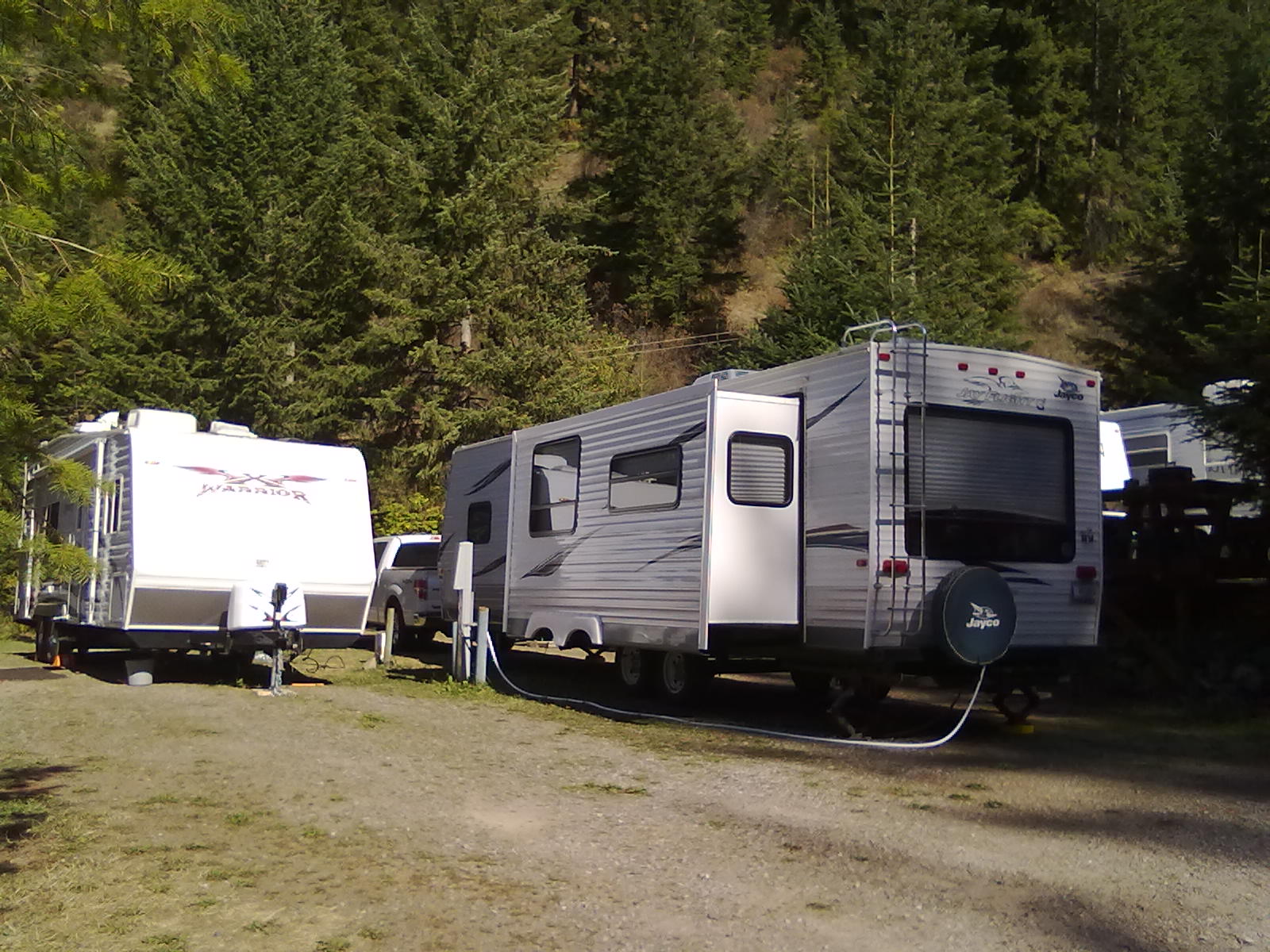
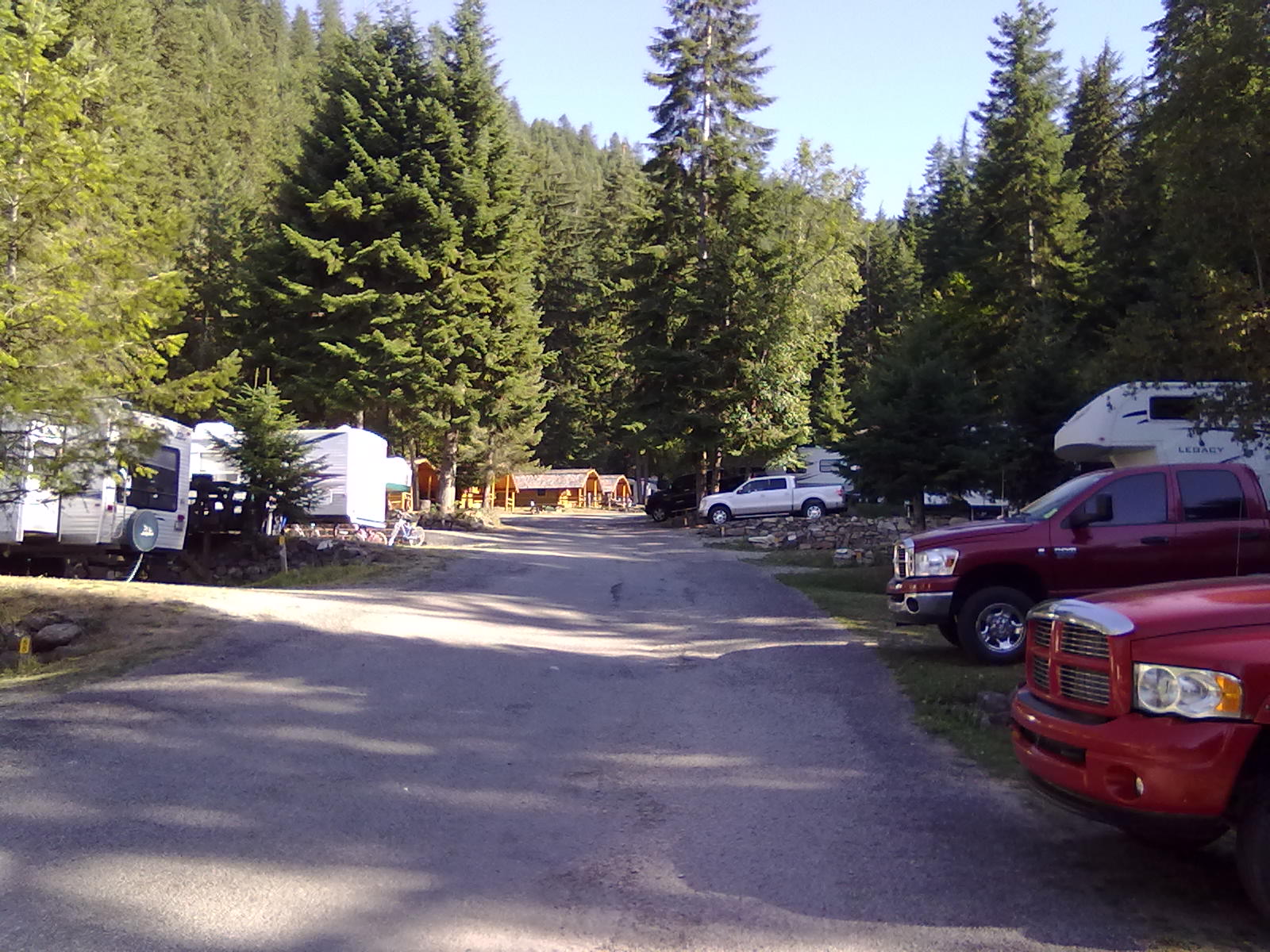
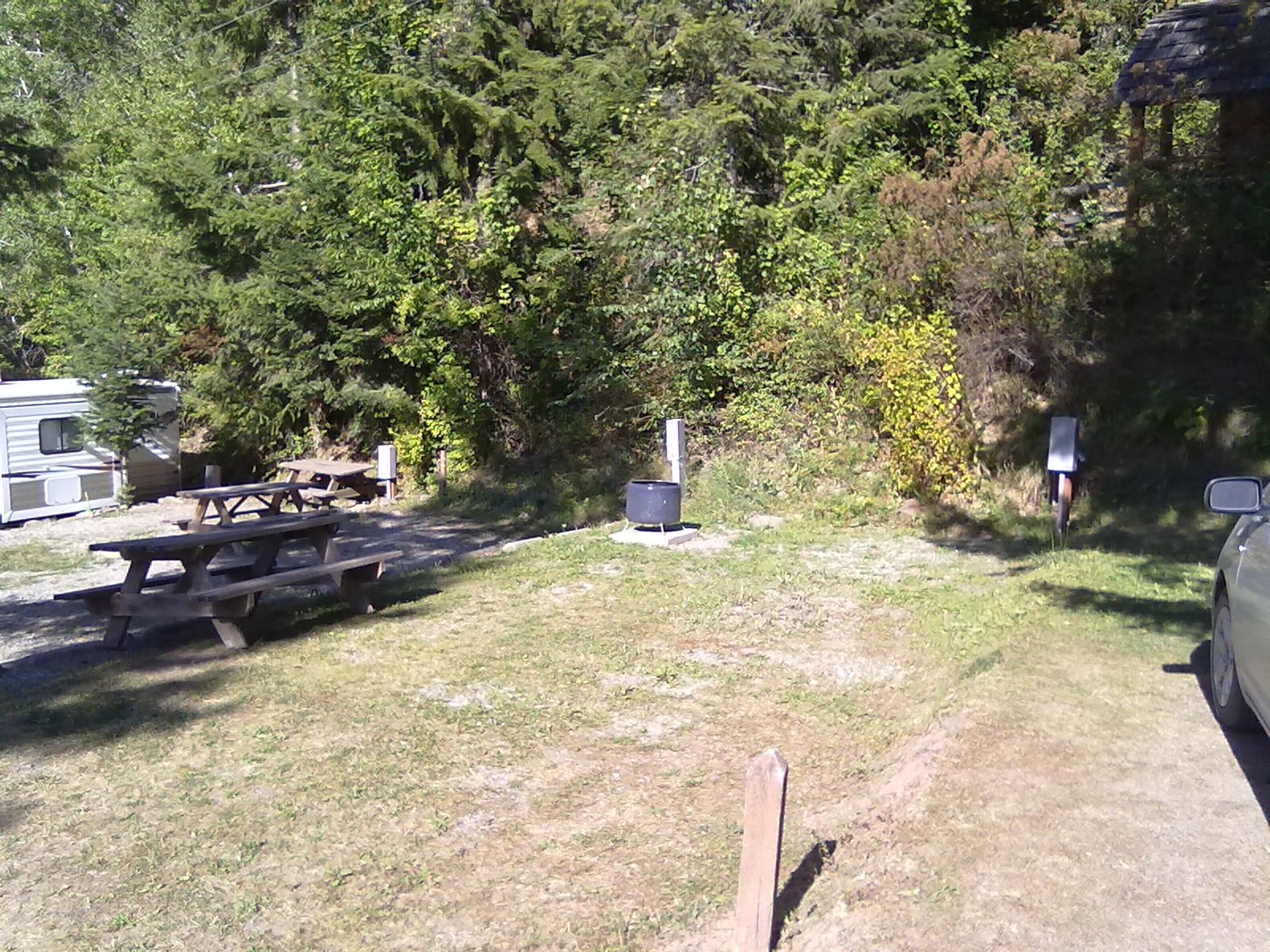
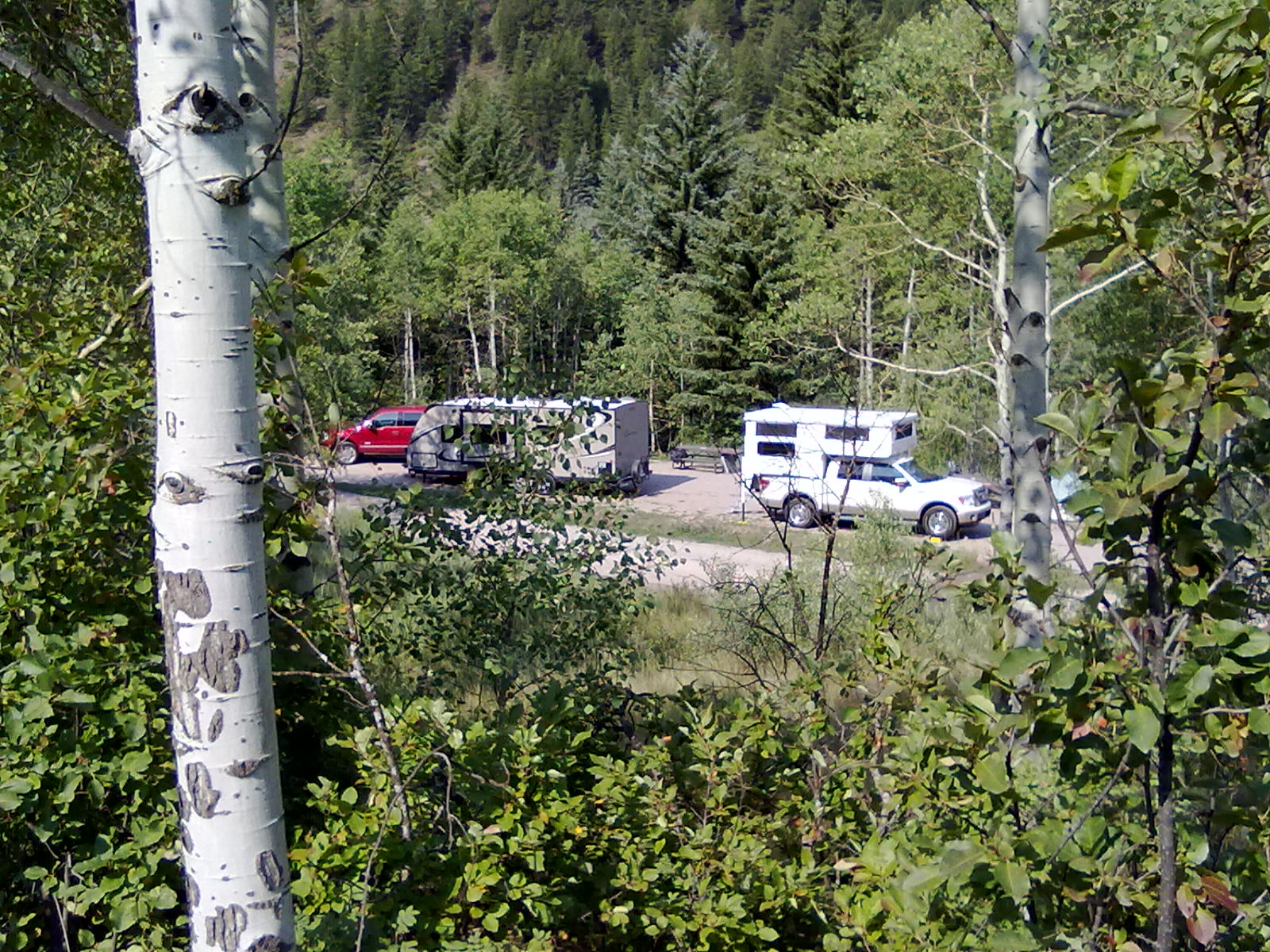
We’re at the Lake Coeur d’Alene Camping Resort, a fairly small, compact campground just south of I-90. Nestled in a canyon to the east of the lake, this campground provides full-hookup back-in and pull-through sites, cabins and tent sites. Approximately 15 pull-through sites are located on 5 terraces in the middle of the campground. These sites are tight, but adequate for large rigs with slides. Along the edges are about 30 shorter terraced back-in sites. We’re in site #31, a back-in nearly at the top of the hill. All of the sites are tight, but the terraces provide a bit more breathing room, even though you look across your neighbors roof. There is a pool, general store, a game room and guest laundry.

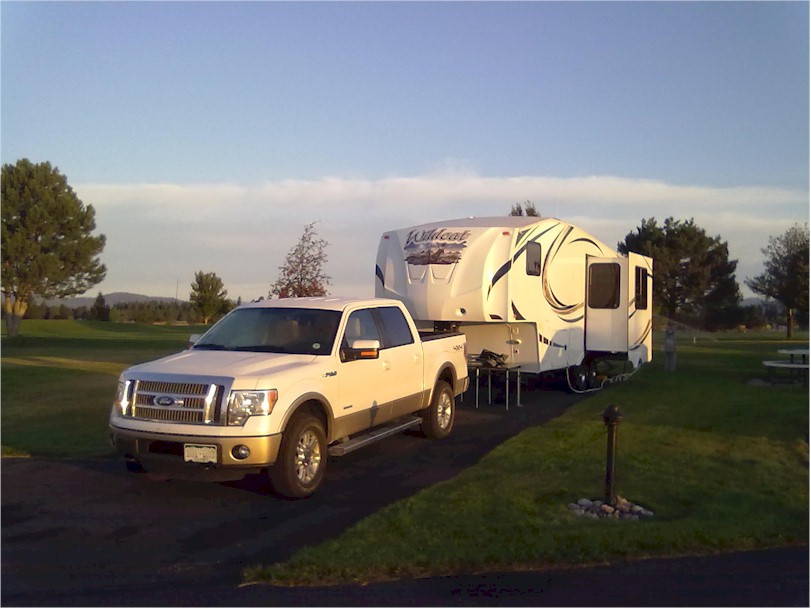
Yesterday was our first “travel” day with the new Wildcat, although we didn’t go all that far, only about 60 miles. Arriving about 1pm, our reservations had been mixed up with the wrong equipment. The campground hosts were accommodating by quickly juggling sites and led us up the hill. With tight turning and maneuvering, our “escort” did a great job of getting everything positioned.

Lake Coeur d’Alene is a natural lake, over 25 miles long with over 100 miles of shoreline. Reminiscent of Grand Country Colorado before the pine beetle infestation, the hills here are a beautiful mix of pine and hardwoods. There are over 50 other smaller lakes nearby, all left behind by the movement of ancient glaciers. The words Coeur d’Alene loosely translate to “heart of the awl”, used to describe the sharp negotiating skills of the native Indian traders when the French arrived in the early 19th century. It’s a beautiful area, worthy of more time and further explorations. But, today we’ll continue east, with reservation at an RV park in Missoula, MT. More from there tomorrow.


A Wildcat in the Family

31 08 2012
Wildcat Extralite 241RLX

Wildcat Extralite 241RLX by Forest River

After departing on Tuesday, we’ve arrived in Spokane, WA to take delivery of a new Wildcat 241RLX 5th wheel camper. Well, it’s not really new, the 2012 model was advertised on Craigslist with only 3 nights and less than 400 miles – almost new. We began working on the deal in late July and after tons of research (can you pull a 5th wheel with a short-bed F-150, slider-hitch or sidewinder, etc, etc, etc?) and negotiating back and forth, I flew to Spokane last week with money in hand. We’ve made a quick dash to the pacific Northwest, spending only 1 night in Sheridan, WY, the next night in St. Regis, MT and finally our first night in the Wildcat last night.

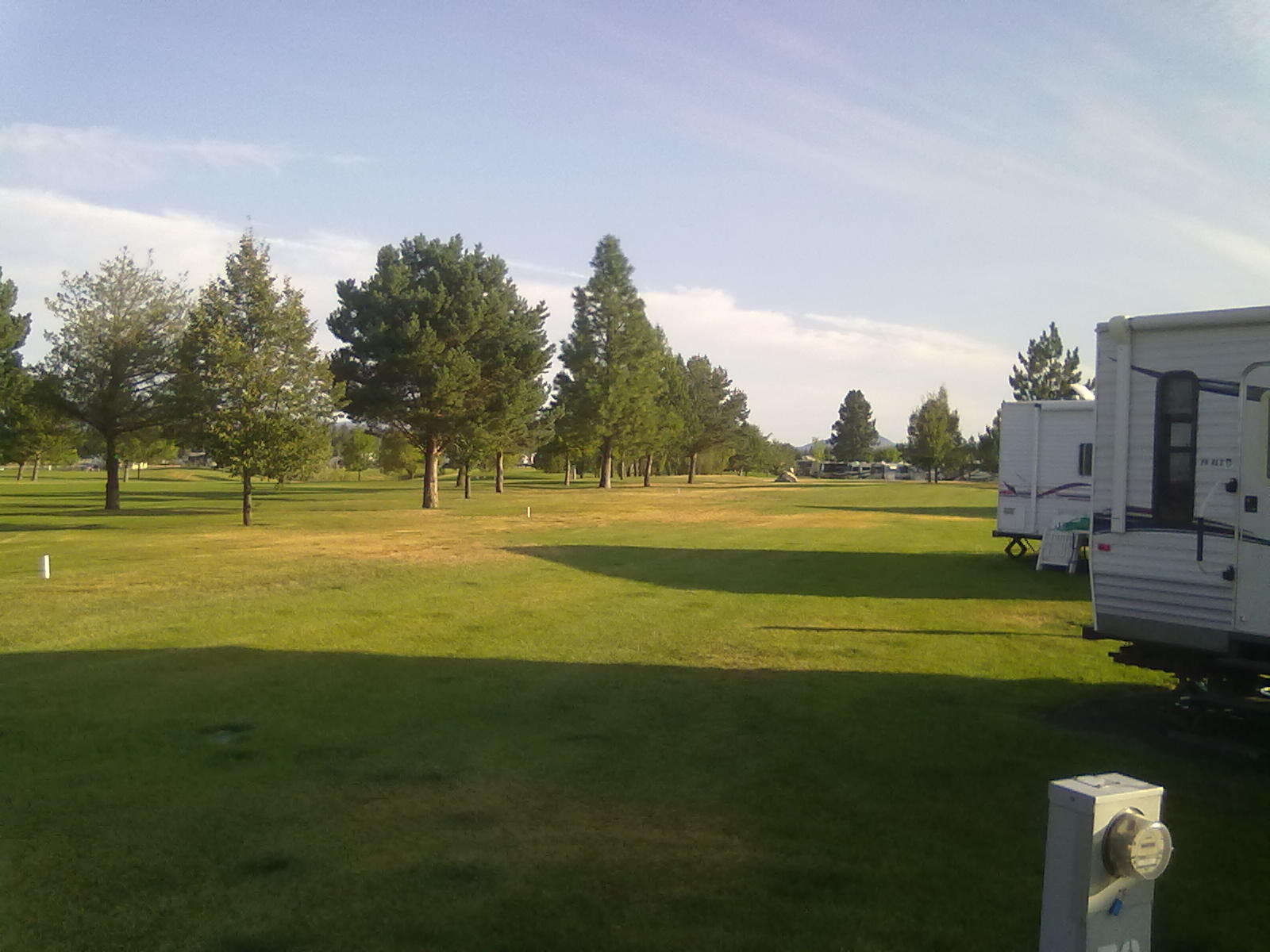
We’re parked at Spokane RV Resort in Deer Park, WA. This is a golf resort, all of the sites overlook a beautiful lush 18-hole golf course. This highly manicured park provides paved roads and site pads, many with a small picnic table and all with full hookups including electric, water, cable TV and sewer. There is also a pool, laundry room, very clean guest showers and complimentary WiFi. We also have full-bar T-Mobile service as well as full Verizon Broadband service.

Spokane RV Resort

Spokane RV Resort in Deer Park, WA

We arrived about 11AM yesterday morning (after gaining an hour to pacific time), checked-in at the RV Resort, grabbed a quick lunch from Zips Drive-In and set to work replacing the Lippert pin box with the new Sidewinder hitch. I’ll post complete details of the new rails, hitch and sidewinder in a later blog. Today we’ll spend the entire day and 1 more night in Deer Park before heading east along I-90. Our first travel day will be short, we’re headed to Coeur d’Alene, ID only about 50 miles.


Towing a 5th Wheel

30 08 2012
2012 Ford F-150

2012 Ford F-150

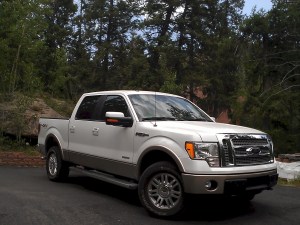
The considerations for our next RV (moving  from the Northstar truck camper) started in mid-2012 when we purchased a new 2012 Ford F-150.  With the Ecoboost engine, a turbocharged V-6, we felt we had enough power and torque to tow a small to mid-sized trailer.  However with the supercrew cab configuration, our payload capacity would be the limiting factor on most towing applications, especially 5th wheels.  Our truck had a maximum vehicle weight rating of 7200 lbs yielding about 1500 of payload.  Reduced by 2 passengers, this allows about 1100 maximum payload.  There is also a 7650 GVWR option on the F-150, but these trucks included the large towing mirrors that in 2012 were not power-fold.  With a narrow garage door, we opted for power-fold mirrors and gave up 450 lbs in extra payload capacity.  This payload capacity is everything you put into the truck – passengers, cargo in the bed of the truck and obviously the weight of the trailer hitch and any towing equipment.

Many other options were focused on towing:

  1. Off Road Package that included the 3.73 electronic lock rear axle
  2. Rear View Camera (included in the Lariat Plus Package)
  3. Trailer Towing Package which includes 7 and 4 pin connectors, hitch receiver, auxiliary transmission cooler and radiator upgrade.
  4. Trailer Brake Controller which provided trailer sway control

With the supercrew cab, our F-150 is configured with the “ultra” short bed, only 5’7” long.  This short bed provides an additional concern for any 5th wheel applications because of space required for turns.  Most trailers are 8’, or 96 inches wide.  The distance between the center of the pivot point on the hitch, or pin box, is half the trailer width or 48”.   A 5th wheel hitch mounts directly above the rear axle, or about 26” behind the cab on this truck.  When turning, the “half side” of the trailer (48”) doesn’t fit into the 26” of space between the hitch and the cab, resulting in cab and trailer contact.  Of course, this is all dependant on how hard you turn.  However after watching a considerable number of 5th wheel trailers maneuvering into camping spots and RV spaces, it became apparent that many times a near 90 degree angle is needed, thus the full 48”.

The traditional “fix” for towing a 5th wheel behind a short bed truck is a slider hitch.  These hitches either manually or automatically move the pivot point toward the back of the box during turning maneuvers.  These hitches are expensive, especially the automatic ones.  They also weight a lot, some approaching 500 lbs.  We couldn’t afford the additional payload weight nor did we want to spend $3500-$4000 for just a hitch.
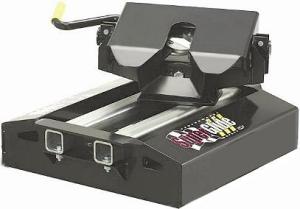
PullRite Super Glide Hitch

PullRite Super Glide Hitch

Another less explored option, is a hitch extension. Instead of moving the pivot point, this hitch accessory simply moves the trailer back from the cab.  In theory, this option pushes the 5th wheel into more of a “bumper hitch” position, much further back from the optimal over-the-axle position.  It also seemed to move the trailer into a less desirable position for fuel economy and maneuverability.

With these payload capacities, costs and short box considerations we had almost decided a traditional  travel trailer was the only option for us.  This was until we met a fellow RV’r at the Peak One campground near Dillon, CO.  They were towing a short 5th wheel equipped with a Reese Revolution, the OEM version of the Reese Sidewinder.  This hitch provides additional clearance for 5th wheel trailers on short bed trucks by permanently moving the pivot point back 22”.  It does this by “locking-out” the pivot at the hitch pin, and instead providing a pivot plate directly below the pin box.
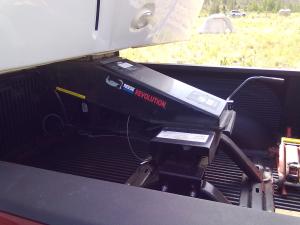
Reese Revolution

Reese Revolution Hitch

Knowing that a hitch option was available, the only consideration became the weight, more precisely “pin weight” of possible 5th wheel options.  As it turns out, there are very few 5th wheel configurations with a rear living room (a floor plan requirement for us) with around 1000 lbs of pin weight.  Our search only revealed 3:  the Springdale and Passport by Keystone and the Wildcat by Forest River.  After extensive research, both through RV dealerships and online forums we decided on the Wildcat 241RLX with a published dry pin weight of 930 lbs.

Once a trailer was located, I began investigating the Reese product line in more detail.  With the Sidewinder you are replacing the coupler (the “tongue” and the pin), but retaining the manufacturers pin box which is attached to the frame. You need to order the Sidewinder specific to your pin box.  Nearly all Forest River 5th wheel trailers use the Lippert 1621 extended pin box. Wanting to also use a Reese hitch for support reasons, I opted for their new R16 hitch.  Both the Sidewinder and R16 hitch was $1500 with free-freight from Tweetys.com.  Bed rails are used to mount the hitch to the truck bed.  For the Ford F-150, Reese provides rails with no-drill attachment plates.  However, these plates aren’t usable with airbags, which are still installed on the truck from the truck camper days.  With standard plates came the requirement of drilling holes in the bed and the frame. For this I opted to use Extreme Hitch, a local hitch shop, which provided the rails and installation services for under $500.  In all we spent about $2000 on Sidewinder, R16 hitch, rails and rail installation services.
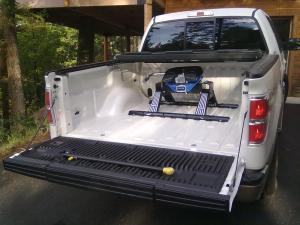
Reese R16 Hich and Rails
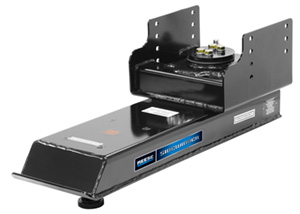
Reese R16 Hich and Rails

Sidewinder Coupler

Sidewinder Coupler

The Sidewinder is easy to self-install for any one handy with tools.  You’ll remove 4 or 6 bolts from the original pin box and remove the factory installed coupler.  Along with this you’ll probably also need to remove the brake lockout switch and possibly the electrical connections from the light/brake cable.  The toughest part is physically lifting and positioning the heavy Sidewinder in the pin box.  You’ll need an assistant or two, or some type of lift.  Insert the provided bolts through the pin box to attach the Sidewinder, torque to spec, reconnect the electrical and brake switch and you’re nearly finished.  Next you’ll hitch up the trailer, position the lock-out wedge and torque to specifications.  It took us about 2 hours to complete the coupler swap and be ready to tow.  You’ll need a small amount of Lithium grease during the assembly of the Sidewinder along with a small amount on the lock-out wedge.  You may also need some wire nuts or electrical tape if you need to move electrical connections.  You’ll find several installation videos on Youtube.
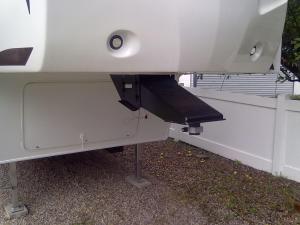
Original Coupler

Original Coupler

The key test of the Sidewinder and hitch was turning and maneuvering the trailer.  In a tight turn, where the trailer is nearest the truck cab, we have about 4 inches of clearance.  I consider this much too tight for unobserved practice.  The passenger is always outside the truck to observe where the trailer is going and how close it is to the cab as well as the top of the truck bed.
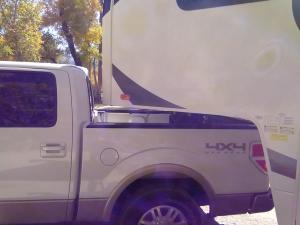
Tight Turn

Tight Turn

Another test is ease of hitching and unhitching.  Both are relatively easy on level ground.  During hitching, the R16 handle is positioned to the unlocked, closed position.  The tailgate is lowered and the truck is slowly backed under the trailer.  Once the pin has passed the back of the bed, the tailgate is closed.  As the pin gets close to the hitch, we adjust the level of the trailer so that the Sidewinder coupler just slides onto the hitch plate.  When the pin is fully locked in place, the green lock indicator is visible and the R16 handle is moved to the locked position.  During unhitching, the R16 handle is used to unlock and open the jaws, the light/brake and breakaway cable disconnected, the tailgate lowered and the truck pulled out from under the trailer.  These maneuvers are simple, certainly much easier then loading the truck camper, and they appear easier then the hook-up procedures for a ball-type hitch with equalizing/torsion bars.

With any type of cargo onboard, we’re still probably pushing 20% or so over the trucks payload.  But, this is much better than the fully loaded Northstar camper that was 50% or more over our maximum payload capacity.  For the truck camper we filled the airbags to nearly their maximum rating of 100 lbs.  With the 5th wheel, we use between 30 and 40 lbs just as insurance in the event of a very bumpy road.  The total trailer (dry) weight is under 7000, which is considerably under the truck’s maximum towing capacity of 9800 lbs.  We’re confident and comfortable with the safety and durability of this configuration.
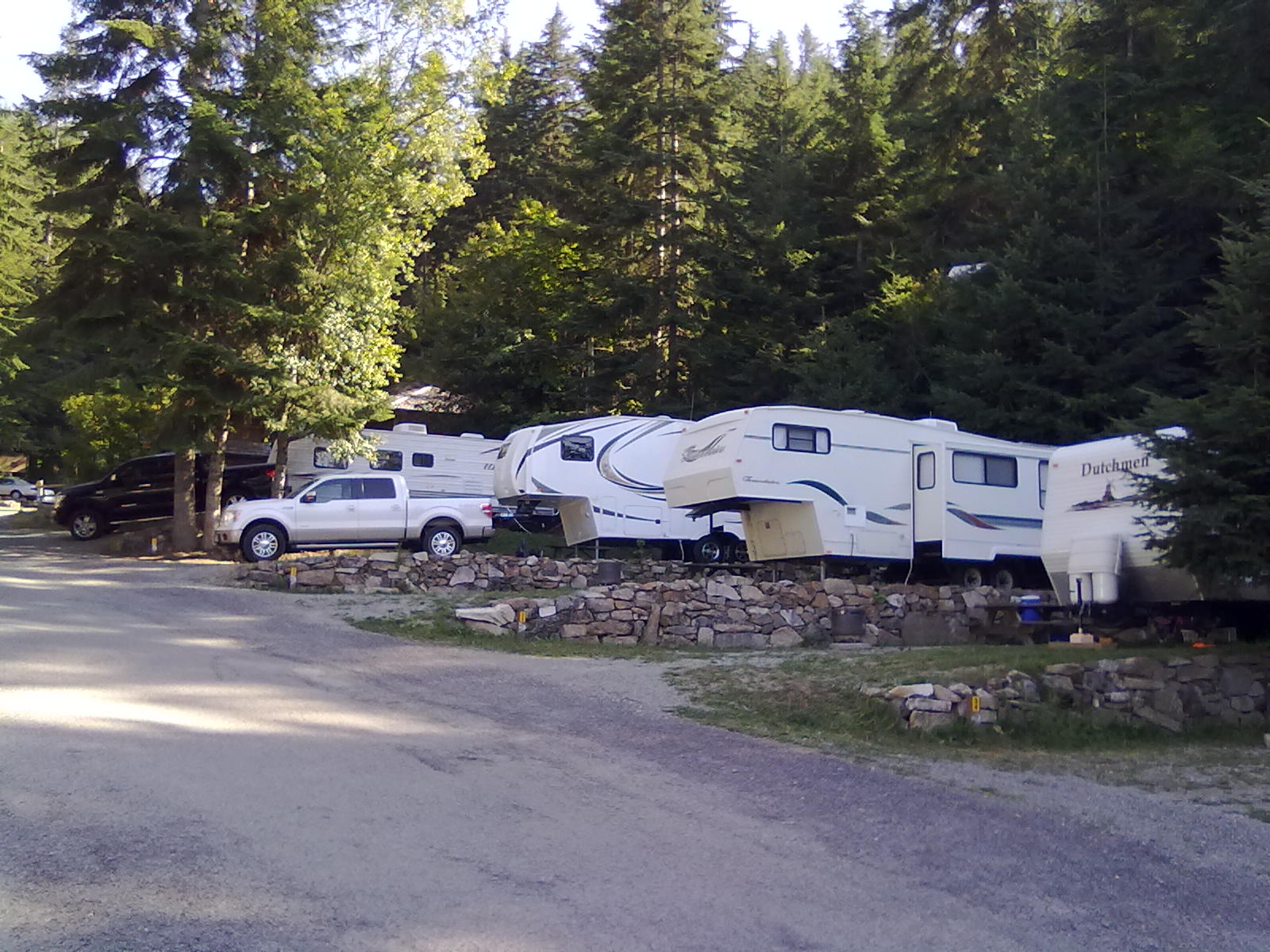


Good Morning from Redstone, CO

18 08 2012
Redstone Inn

Redstone Inn

After a late departure yesterday afternoon, and a nearly 4 hour drive, we’re south of Glenwood Springs in the Crystal river valley at the Redstone Federal campground. The 35 sites are organized around 3 different loops. We’re in a shared site (#3 and #4) to the right of the main entrance and about a half mile away from the village of Redstone. Sites along this loop provide gravel back-in and pull through driveways, fire pits and picnic tables. Threaded water faucets are scattered throughout the campground with one close enough to easily stretch a 75’ hose to refill our tanks. The two upper loops (Osgood and Allgier) provide 30 Amp electrical. There are very clean pit toilets and solar showers available. We’ve driven out of cellular phone and broadband internet coverage at Carbondale, so there will be no email or phone calls for the remainder of the weekend.

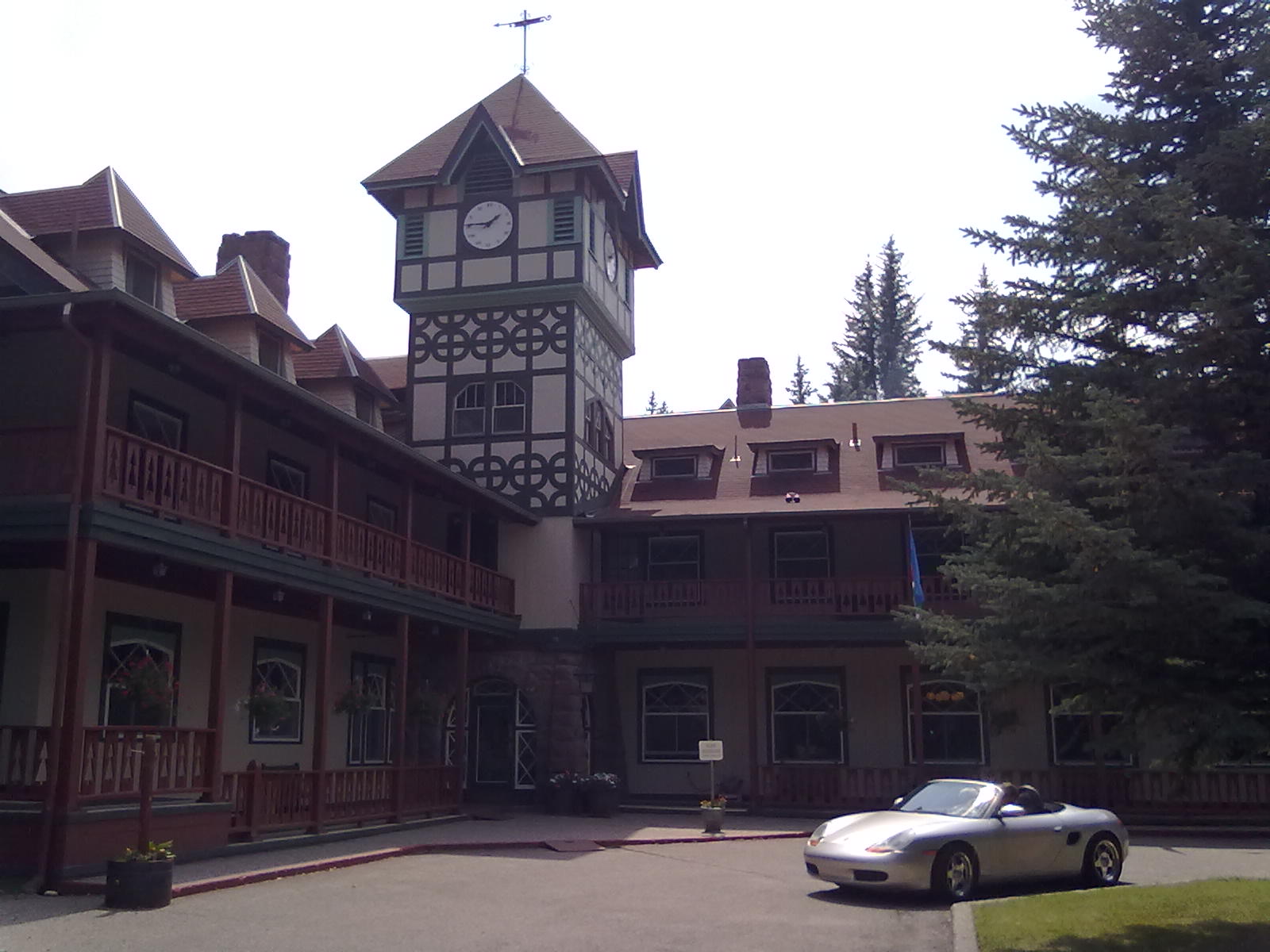
On Saturday we take the short bike ride into the charming village of Redstone. We wander through some of the shops and art galleries and end up on the back patio of the Redstone Inn for a cold beverage. The Inn and many of the homes in town were provided to coal miners by John Osgood the founder of the Colorado Fuel and Iron company. Using “welfare capitalism”, Mr. Osgood provided the primitive homes, stores and even heath care for his workers. The Redstone Inn, originally a 40-room dormitory, housed the single men while married men were provided a small village home. Meanwhile, Osgood built Cleveholm Manor for himself, the “Redstone Castle”, a 42 room Tudor style mansion just south of town. The Castle was part of the 72-acre estate that also included servants quarters, a gamekeepers lodge, carriage house and a greenhouse. Mr. Osgood made his fortune while controlling workers, fighting against unions and aggressive takeover bids by powerful east coast companies. In 1903 the billionaire John D Rockefeller successfully won the stock war and took over CF&I. Osgood died at Cleveholm in 1926.

On Sunday we return home, with a brief stop at Grizzly Creek rest area in Glenwood Canyon and another stop at the rest area in Edwards (MM160) where potable water and free RV dump facilities are provided.


Good Morning from Lake Dillon

4 08 2012
Bluegrass and Beer Festival

Bluegrass and Beer Festival

This weekend we’re back at Peak One campground, right on the edge of Lake Dillon, and within a 20 minute bike ride of downtown Frisco. We first explored this area  in May, and have returned for the annual Keystone Bluegrass and Beer Festival.

Today we’re planning a short bike along the shore of Lake Dillon before we head over to the festival to listen to some bluegrass and enjoy some Colorado beers. The marketing folks have had fun with the event description “Keystone brings the wonders of Appalachia to the Rockies. Down-home cooking, frothy flavors and mountain music are just a piece of the pie. In a whirlwind of hillbilly luxuries, folks gather while 30 microbreweries from Colorado and beyond showcase their unique blends of hops and barleys. Live music rocks out on 3 stages. “

When we were last here the campground was experiencing water problems due to several broken water mains. The water is back on, but the porta-potties are still in use due to a sewer system problem. Once they get all of the repairs made, Peak One will offer flush toilets and a water filling hydrant on loop A near site #2. Each site has a picnic table and a fire ring. We’re in sites #69 and 70. The hosts, Dottie and Bill, are here through mid-September.

On a “technology note” – the cellular service is awesome here. Tethered to an HTC Radar 4G, we’re achieving download speeds of over 3MB.


Jefferson Lake camping

22 07 2012

Jefferson LakeAfter biking the Colorado Trail from Kenosha Pass Campground, we took a drive over to Jefferson Lake to explore the 3 campgrounds there.  Lodgepole, Aspen and Jefferson Creek all offer reserveable campsites with  primitive facilities, vault toilets and hand-pump water faucets. Each campsite also has a picnic table and fire ring.  We’ve stayed in Lodgepole, back in June of 2010 when we left due to snow!

While Lodgepole has a few good sites we found that Jefferson Creek is a nicer campground.  Preferred sites at Jefferson Creek would include #5, #8 & #10 or #10 & #11.  Site #12 is a very nice pull-through that could be matched with #9.

This is the last campground on the road, and between 1 and 2 miles up to the lake.  However, the road continues with a very steep incline, not suitable for bike riding (at least not with our skill set)


Kenosha Pass Campground

21 07 2012

South Park views from Colorado TrailGood morning from the top of Kenosha Pass.  Straddling the divide between the front range and South Park, this small Federal campground has 18 rustic sites.  The Colorado Trail crosses highway 285 at the campground making this an ideal spot for hikers and bikers to overnight or base camp.  At over 10,000 feet and set among groves of aspen and pine, the rustic facilities include hand pumped water and several clean vault toilets.  The entrance road and two gravel loops are badly in need of road grading.  In fact, this campground seems to have fallen off the repair list – many of the sites have missing or broken parking guides and picnic tables that are missing seats or some portion of the tops.
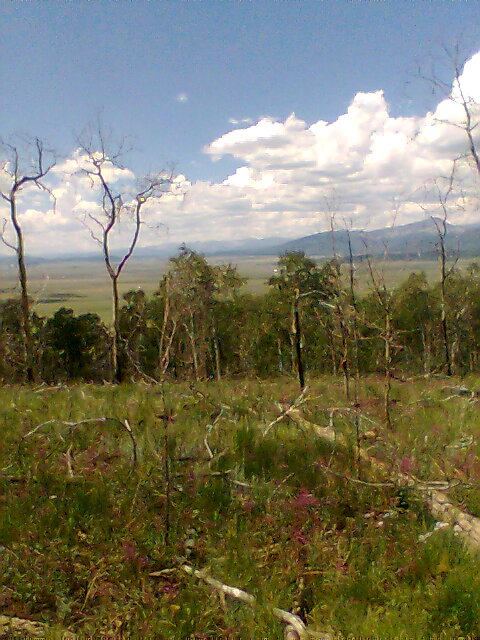
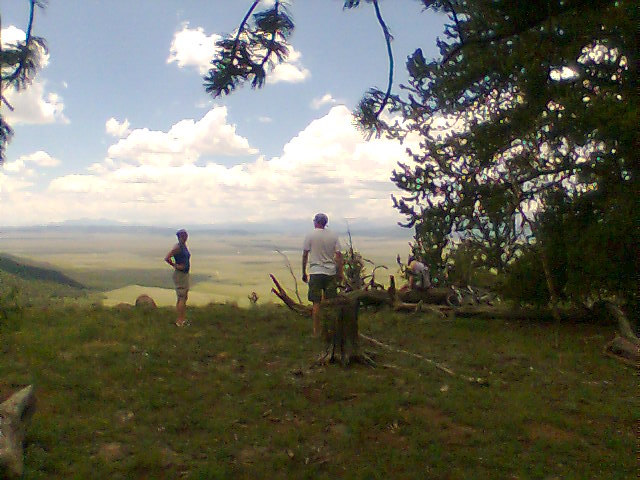
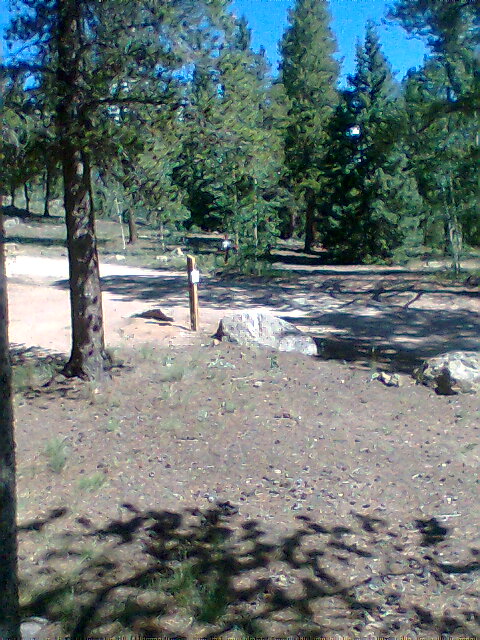
We’re in site #7, shown as side-by-side with #5, outside, back-in sites on the recreation.gov reservation site.  But upon arrival we find that #5 is on the inside of the loop and one site away from #7.   Nearly all of the sites are set on some angle making leveling a challenge at best.  We end up digging out below the rear tires, and raising the front on 5 blocks – and we’re still not level.  Site #7 has a unique rock outcropping that makes a nice backdrop between the campsite and the highway.  But, it also seems to be the playground for the kids – so it can get a bit noisy.

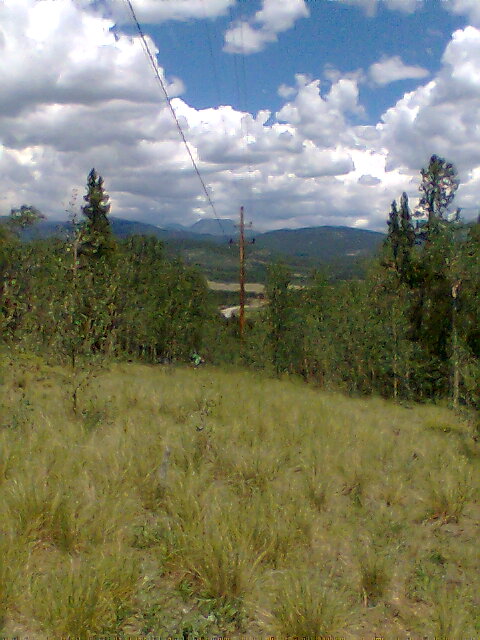
The Colorado Trail is Colorado’s premier long distance trail stretching almost 500 miles from Durango to Denver.  On Saturday we explore a small portion of the trail that heads southeast towards Denver.  In this part of the trail, outside the wilderness areas, bikers, hikers and horse-back riders are all sharing the trail.  Initially the trail is fairly level as we traverse the ridge overlooking South Park.  Eventually it gets a bit steeper, but arriving at an open area provides beautiful views across South Park and beyond to the Jefferson Lake area, the tall peaks along the continental divide and even some snow patches remaining near Breckenridge.  On Sunday we explore the trail going to the north leading toward Jefferson Lake, Breckenridge, Dillon and eventually turning south toward the Collegiate Peaks Wilderness. This side of the trail is much steeper, and we’re back in camp after a fairly short, but exhausting ride.

Other sites at Kenosha Pass Campground that would be possibilities include #22 (a long pull-thru) and #21 (inside across from #22), #14 & #15 or #10 & #11.  If site #5 was available, #6 on the outside is closer than #7.  There was no wireless network at Kenosha, however it is very close.  Full bars of T-Mobile service were available during most of our Saturday hike.


A Day in Mesa Verde

6 07 2012

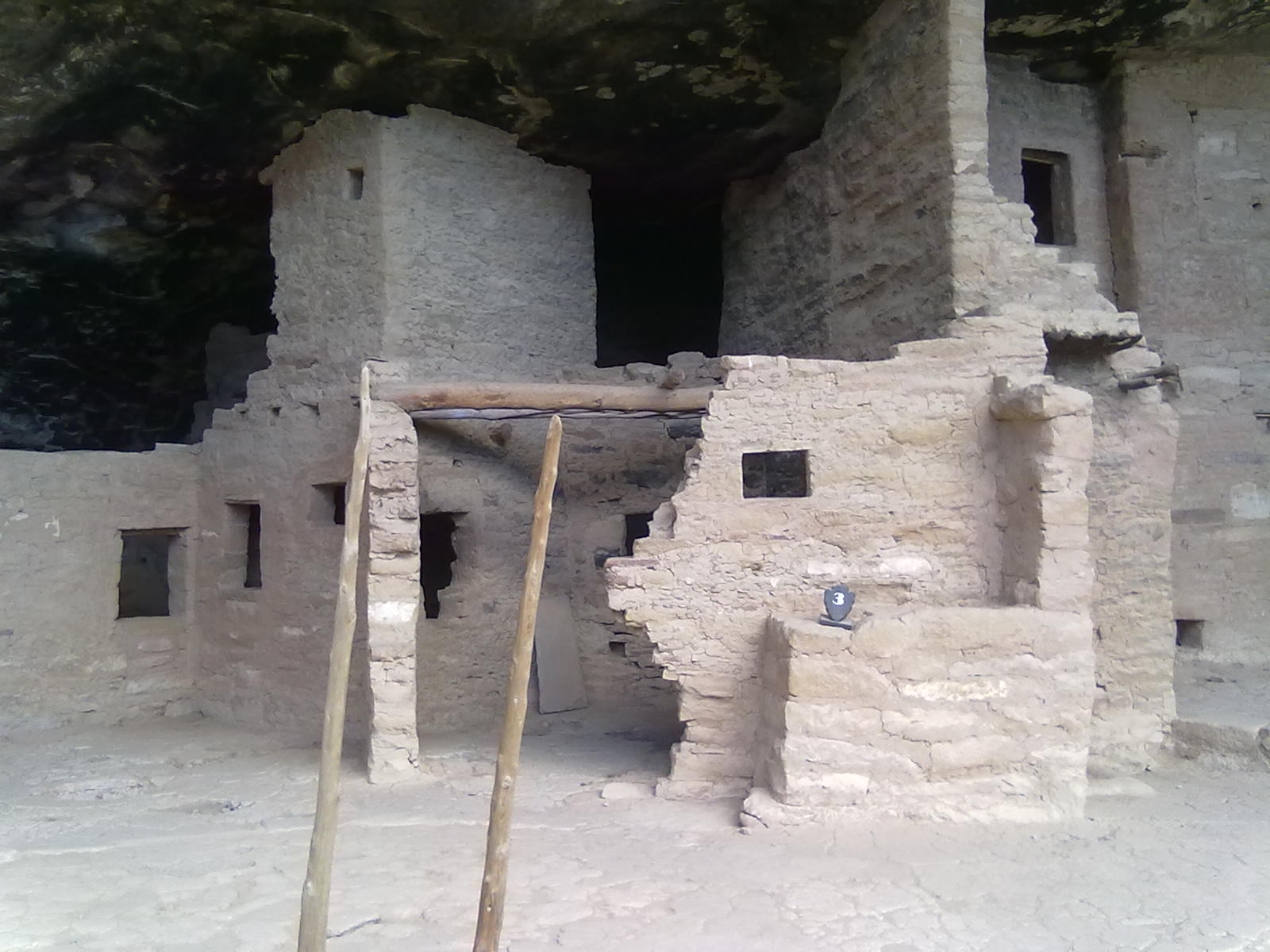
Mesa Verde, Spruce Tree HouseOur drive to Mesa Verde is a short 15 miles from Mancos State Park.  It seems to take longer to drive from the park entrance to the visitors center than it took from the campground.  The Far View visitors center has a small gift shop, history exhibits and most importantly, sells the $3 per person tickets for entry into the most well known exhibits.  We secure tickets for the guided tour of Balcony House at 3:30PM.  We also elect to buy tickets to tonight’s twilight tour at Cliff Palace.  The twilight tours provide unique access in a small group (only 20) of visitors led by a guide portraying a character important to early Mesa Verde exploration or reconstruction.  Tickets for the twilight tour are $10 per person.

After leaving the visitors center, our first stop is at Spruce Tree House.  The hike down to the ruins is paved and in places very steep.  Park Rangers are available to answer questions and keep the visitors from getting too close to walls and balconies.   A fully reconstructed kiva is busy, with kids and adults scurrying up and down the ladder through the small hole in the roof.  Seems very claustrophobic and none of our group ventures into the ancient ceremonial pit room.

From the Spruce House we take a quick driving tour around Cliff Palace loop, stopping at the picnic area for some lunch before continuing to Mesa Top loop.  At 3:30 we set-off with our park service guide for the decent into Balcony House.  The entrance to Balcony House is mostly by stairway, constructed by the CCC.  After a very educational tour we depart Balcony House via a small tunnel and several ladders which was probably the original way in and out of this magnificent cliff-side abode.

After a refreshing cold beer at the café near Spruce Tree House, we explore the Mesa Top loop stopping at most of the parking areas to see the pit houses, view Square Tower House and the cross-canyon area for Cliff Palace. The views across the canyons are vast and must have poised an amazing challenge to the early inhabitants.  With the sun beginning to dip low on the western sky, we arrive at the Cliff Palace for our twilight tour.  We watch as the last large group of visitors exit the ruins leaving only 20 of us awaiting our guide.  At exactly 7:15, “Sam”, a native Navajo Indian who was a supervisor of the reconstruction workers in 1930 arrived to be our guide.  Sam was dressed in period clothing, a stunning black velvet coat, with a red and black slash, simple tan pants and moccasins.  His silver belt, huge turquoise and coral necklaces and turquoise and silver bracelets were all beautiful.  Sam told us the story of working at Mesa Verde in the 1930’s when much of the reconstruction was done by local Navajo Indian tribes.   He also explained that the “white” archeologists of the 1930’s have several facts of Mesa Verde wrong – namely that the people didn’t “disappear”, they simply moved on – and today are the ancestors of the Navajo, Ute and Hopi tribes that still inhabit areas in the southwestern US.  The tour experience was a wonderful, thought provoking hour and a half.  At the end, Sam urged each of us to wander through the ruins, or just sit quietly and enjoy the long shadows as the last sunlight found its way into the canyon alcove.  Leaving the park at nearly 10pm, we were lucky to find the Millwood Junction http://www.millwoodjunction.com/ in Mancos still open and serving dinner.  Tomorrow we head home, with a stop at East Fork campground near Pagosa Springs.  More from there.

This slideshow requires JavaScript.


Mancos State Park

5 07 2012
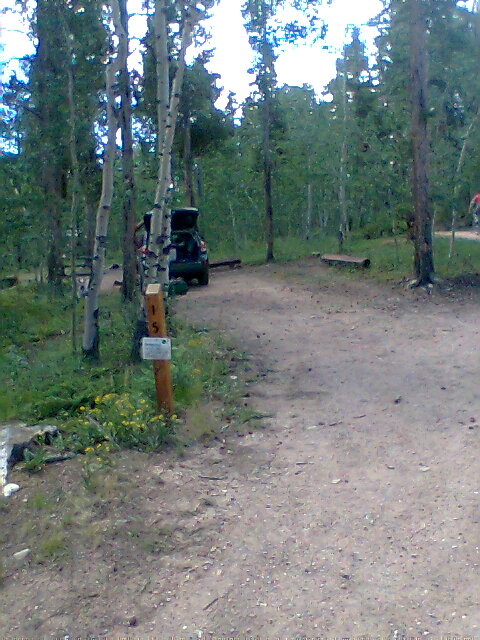
Mancos State Park #5

Mancos State Park #5

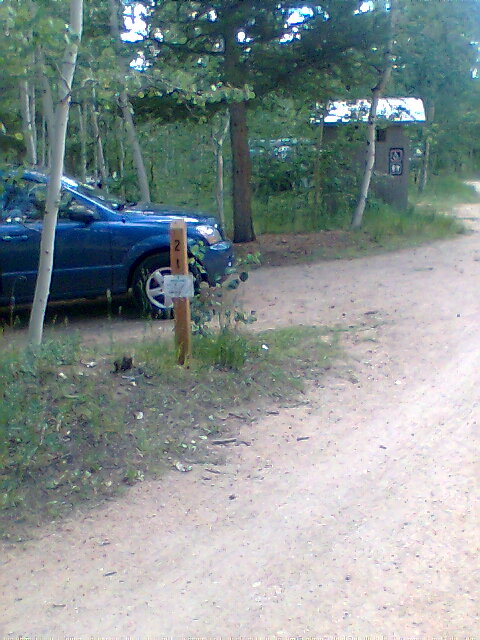
We’ve arrived at Mancos State Park between Durango and Cortez in southwestern Colorado.  The drive across Wolf Creek pass is always exciting.  Pagosa Springs was busy and fully decked out in 4th of July decorations and events.  The State Park is located about 5 miles north of the small town of Mancos.  The park has 32 non-electric campsites in two campgrounds, the main sites being along the spillway and dam of Jackson Gulch Reservoir.  The western sites, reserved primarily for tenting and small rigs, is on the opposite side of the lake.  We’re in sites #4 and #5 in the main campground.  Both back-in sites, one is on the outside of the loop overlooking the damn and spillway, the other is on the inside of the loop near a water faucet and vault toilet facilities.  Water is available, however the faucets are not convenient for RV filling.  Upon arrival we had to back-in to an already occupied site #9 and stretch two hoses to reach the faucet.  Set in tall lodge pole pines, both sites offer good privacy and full shade.

Mancos State Park #4

Mancos State Park #4

Other good sites here at Mancos include #9, a pull-through paired with #8 on the inside loop.  #1 is a lone pull-through that is very private and near the dam.  #7 would also be a very good back-in, lone site.  There are also 2 yurts available for rent at $70/night.

This park has plenty to do.  There are multiple trails for biking and hiking.  A park ranger leads a group hike weekly for discovery of animals and plants that live in the park.  Fishing is allowed from the lake, and there are boats for rent. Various games are available from the park office such as horse shoes.  After a relaxing morning, we’ve decided to do some bike riding and exploring.  A few thunderstorms keep us close to camp and our rain awnings.  We’ll hope for better weather tomorrow for our explorations of Mesa Verde.

This slideshow requires JavaScript.


Happy July 4th from Four Corners

4 07 2012

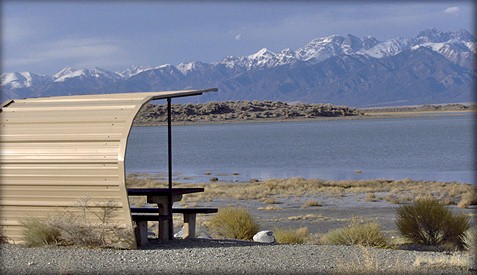
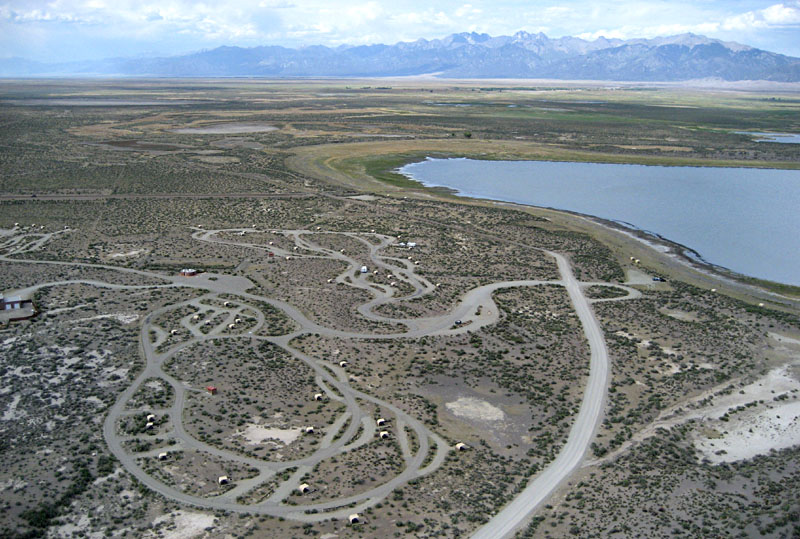
San Luis Lakes State ParkTaking advantage of the mid-week holiday, we’re headed for the Four Corners area of southwestern Colorado for Independence Day.  The Four Corners is the only place in the US that 4 state boundaries , New Mexico, Colorado, Utah and Arizona, come together at one point.  Our first stop on Tuesday evening is at San Luis Lakes State Park near the Great Sand Dunes National Park.  We won’t have time to visit the dunes, but wanted to check out the Colorado state campsite.  Organized around 3 loops, the 51 campsites all have 30 and 50 amp electric hook-ups.  Water is available at conveniently located spots on each loop.  There is also a very clean bathroom with two pay-showers.  On the other side of this bath house is a laundry room with pay machines and a small library of books and DVD’s.  

San Luis Lakes State Park

San Luis Lakes State Park

We’re in sites 18 & 19, adjoining on a single long pull-through.  We’re on the eastern edge of the campground, closest to the nearly dry lake.  With low snowpack in Colorado this winter, lakes and ponds are quickly drying up, especially in this hot desert region.  Across the lake you can see the Great Sand Dunes, and the Sangre de Cristo mountains beyond.  After a beautiful sunset, it’ a cool starry evening here in this high plains desert.

Tomorrow we’ll pack up and head west across the San Luis valley, crossing the Rio Grande at Del Norte before turning south to make the 10,857’ climb over Wolf Creek pass. Once over Wolf Creek we’ll continue through Pagosa Springs and Durango to the small town of Mancos.  Mancos has recently been in the news as the location of the Weber fire, another major fire in Colorado this year.  The Weber fire has burned about 10,000 acres and of today is 90% contained.  We’ll be camping just north of the town, in Mancos State Park.  More from there tomorrow.