Meteor Crater
Somehow we’ve managed to bypass Meteor Crater Natural Landmark on two other trips through northern Arizona. But, with routing directly from Albuquerque to Flagstaff, we opt to spend 2 nights at what will probably be just a tourist trap.
Meteor Crater is at I-40 exit 233, about 20 miles west of Winslow, AZ, 5 hours west of Albuquerque and 1 hour east of Flagstaff.
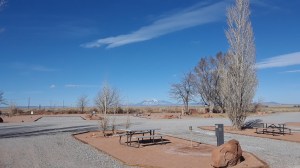
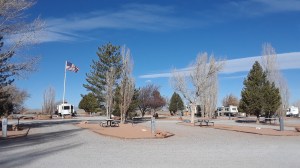
Arriving at the Meteor Crater RV Park, we’re pleasantly surprised. Located just south of I-40, without the nearly constant SW wind, the park would probably suffer from the relentless interstate noise. The park offers about 70 mostly pull-through level, graveled sites, full hookup as well as water/electric only. Sites are nicely separated by islands of pine and tall poplar trees (still without leaves), but not to the detriment of easy satellite placement. Water faucets are heated, and along with a heated hose, we’re ready for any potential cold weather. As it turns out, it is chilly, falling just below freezing both nights. And, on the morning of our departure, even a trace of snow in the campground.
Other facilities at the park include a nicely stocked convenience store, a laundry room and free WiFi – which for the most part was OK, running along at about 5Mb – but at other times refusing to connect at all. There’s also a gas/diesel station where you receive a $.05/gallon park guest discount.
-
- Meteor Crater RV Park
-
- Meteor Crater RV Park
-
- Meteor Crater RV Park
-
- Meteor Crater RV Park
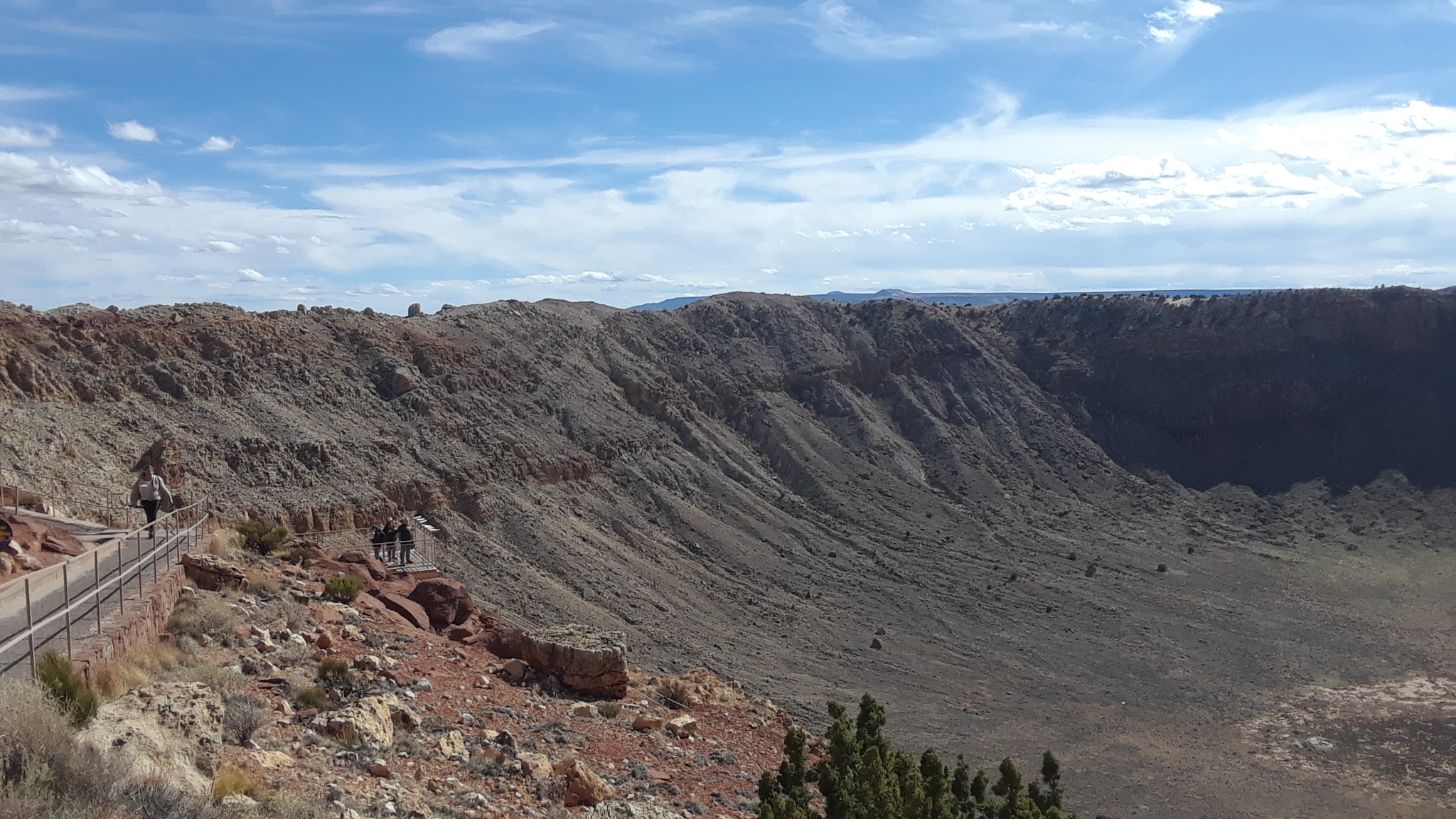
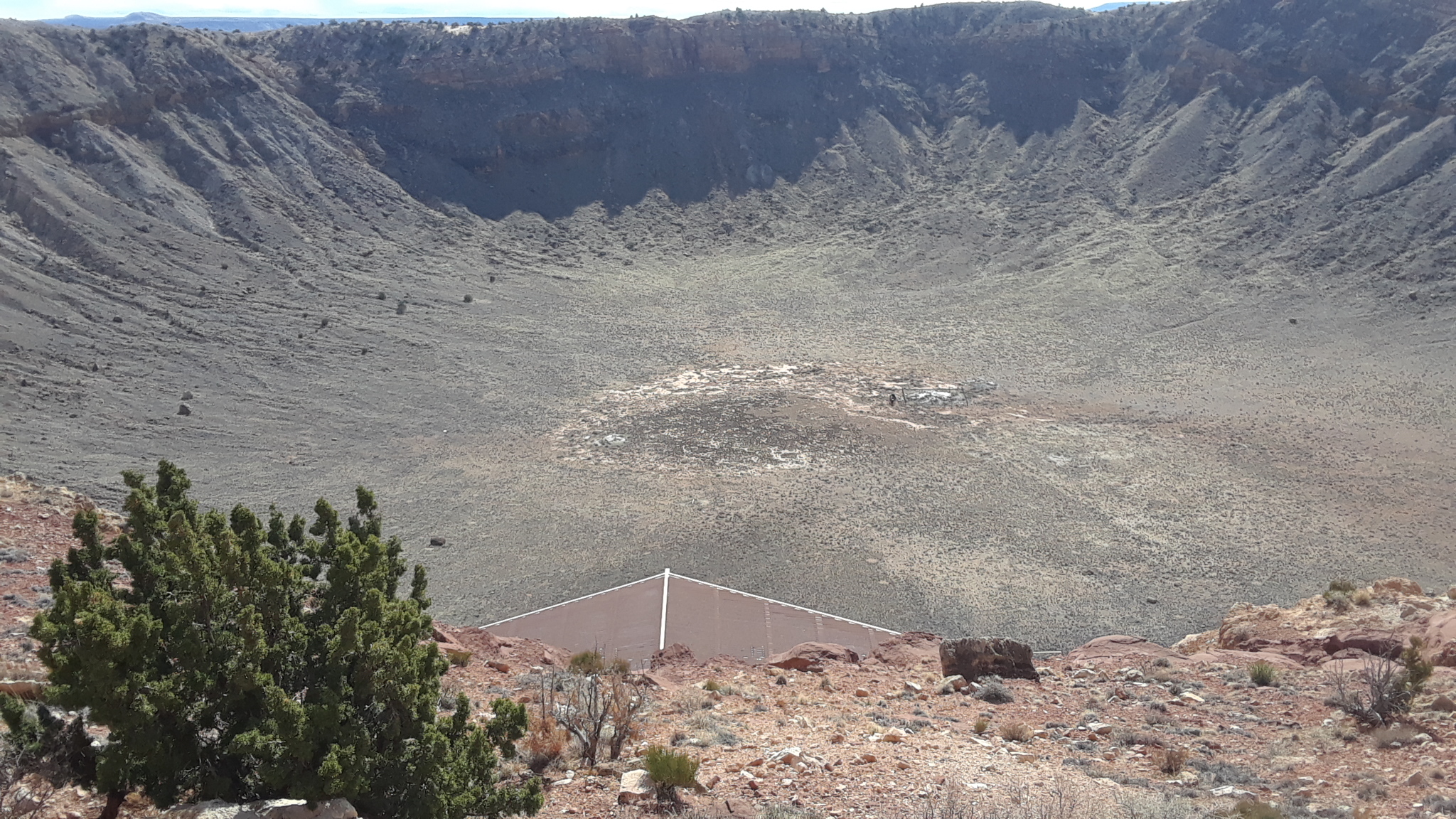
At the Meteor Crater Visitors Center, we receive a 10% discount as an RV park guest on the $20 entrance fees. The facility includes a 4D “crater experience”, an 80 seat auditorium with a movie about the creation of the crater, many interactive exhibits, and of course a gift shop. At the upper level of the center are both inside and outside viewing decks at the edge of the massive crater. Estimated to have been created 50,000 years ago by a 150 foot wide meteor, the crater is 4000 feet wide, nearly 2.5 miles in circumference and initially over 550 or about 60 stories deep.
Meteor Crater
Meteor Crater
After being discovered in late 1800’s the initial assumption was that the crater was volcanic. It wasn’t until the early 1900’s that the crater’s origin was discovered as an impact caused by a meteor. This knowledge, couple with the craters extremely good preservation led NASA to train early moon astronauts here, acquainting them with soil collection methods at the moon’s very similar impact fields.
All in all, both the RV park and the Creator exhibits were enjoyable – we’d recommend to anyone with an interest in natural history. From here we’re headed across to Flagstaff before turning south to Camp Verde. More from there…


