Mission, Bentsen Palms Village RV Resort

28 03 2015
Bentsen Palm Village, Circle Pull-Throughs

Bentsen Palm Village, Circle Pull-Throughs

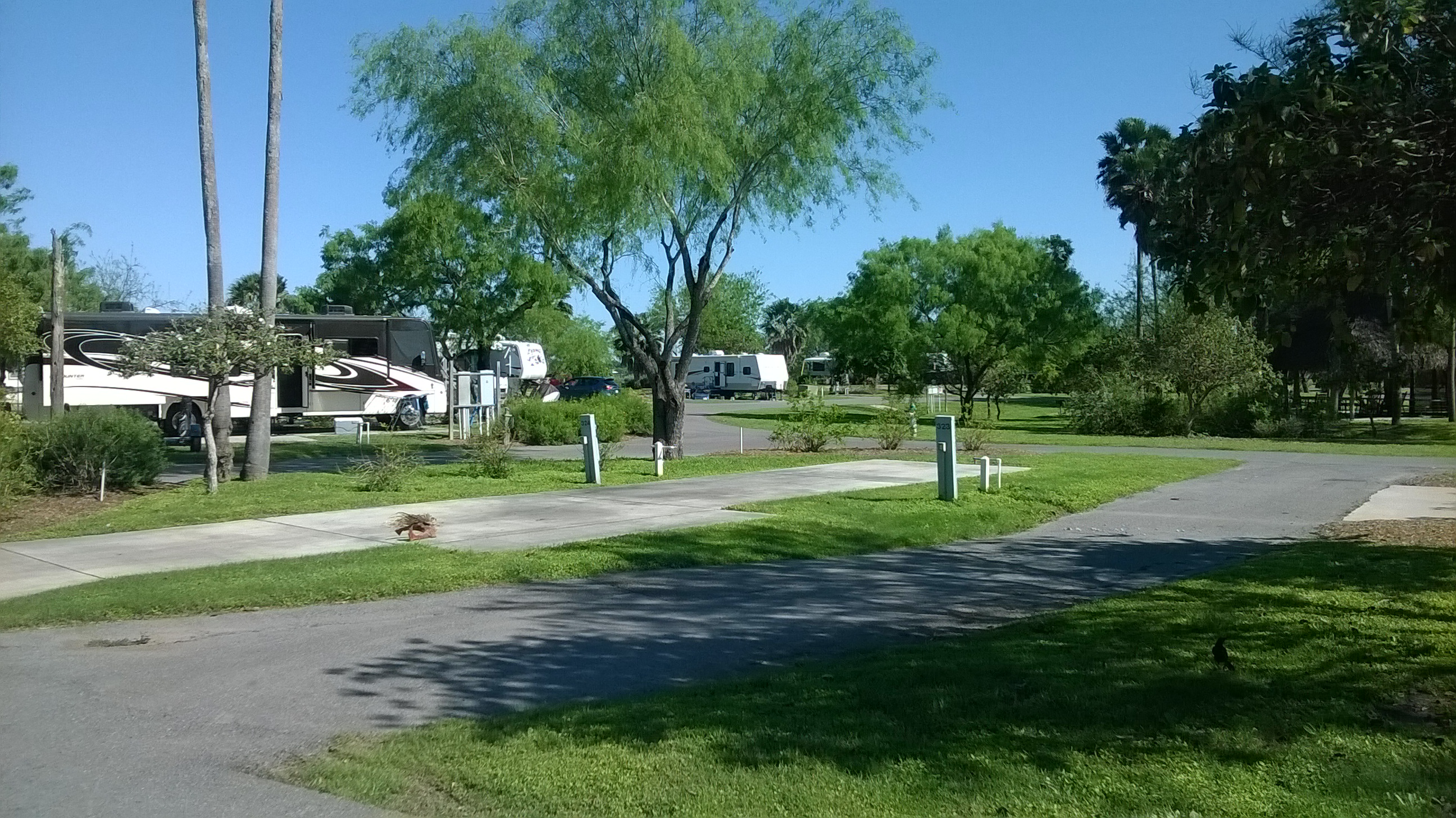
We’ve arrived back in far south Texas at the Rio Grande River – just a few miles north at Bentsen Palms Village RV Resort. This is one of the nicest RV parks we’ve stayed in. Reportedly designed after Disney World’s Fort Wilderness, the park has 4 large circles of pull-through sites and an outer border of back-in sites. The 4 circles contain about 20 sites each with a unique park amenity in the center ranging from a club house to palapa covered pool tables creating social “neighborhoods”.  All 250 sites are huge compared to other urban parks.  We’re parked at site #235, about half way along the eastern edge.  Out our back window is the community Organic Garden to the left and a Dog Agility Area to the right.  All sites provide cement or asphalt pads, full services including 60 channel cable TV and a very nice patio area.  Nearly every site has a palm tree at the front and some type of hedge next to the patio to improve the privacy.   Ours has a few small bushes including a blooming rose that’s been well cared for.  Along the western edge of the park are “super sites”, even larger than the site we’re at and each include a small casita.  With both an rental or purchase option, some owners have customized these casitas as an addition bedroom, a huge outdoor kitchen and BBQ area or left them unfinished for storage of bikes and golf carts.

Bentsen Palms Village is just south of Mission next to the World Birding Center and Bentsen Rio Grande State Park.  Complimentary passes to both recreation areas are available.  There are also bicycles and kayaks available to borrow.  The complimentary WiFi worked well.  For $40/night, this is a very nice resort in a quiet location close to the amenities of Mission and McAllen, TX


Big Bend National Park

21 03 2015
Boquillas - Jose Falcons

Boquillas – Jose Falcons

With continued rain storms passing over southwest Texas, by Friday we’re wondering if it’s worth the 3 hours in and the 4 hours out of Big Bend.  But, the weather forecast is about the same for the Ft. Davis area and all the way east to San Antonio.  So by noon on Friday we’re packed up and headed south toward Alpine, TX for a few groceries and then to the west park entrance near Terlingua, TX.  The campground availability of 30 sites at Rio Grande Village is a welcome relief as we stop at the entrance station.  We were somewhat worried that spring beakers might make sites hard to come by.  But, the ranger explains that with the last few days of rain, many have ended their spring break trips early.

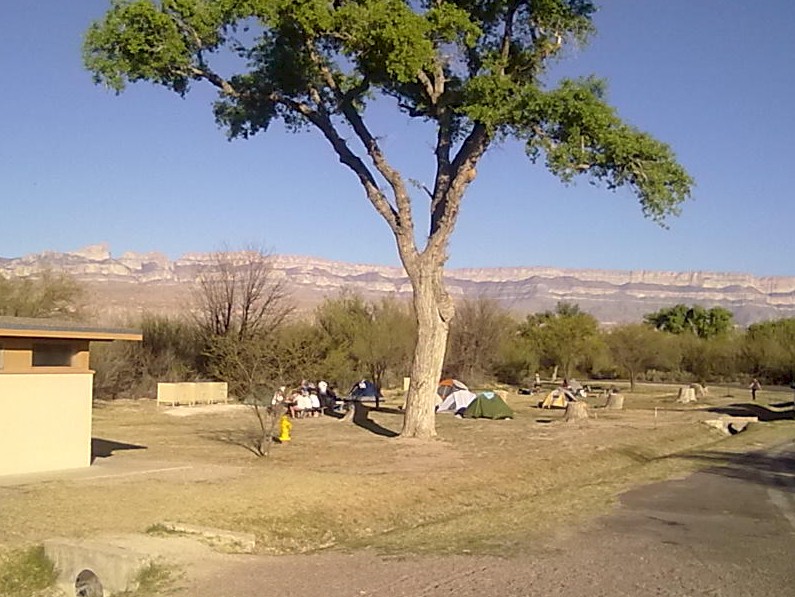
After taking on a tank of water, we select site #57 at Rio Grande Village.  There are about 100 sites here, about half are reservable and the others are first come first serve. About half of the sites are in a no-generator zone.  The sites are just a few hundred feet from the Rio Grande and nearly in the shadow of the shear mountains that form the entrance to the Boquillas Canyon.

Our return visit to Big Bend is all about the Boquillas Crossing, probably one of the most remote “legal” border crossings into Mexico.  Shuttered after the 9/11 tragedy, the crossing was nearly ready to reopen 3 years ago when we were last here.   After what seemed like all night rain, we’re greeted with somewhat drier and clearer skies on Saturday.  By around 11am, we’re on our way over to the crossing station.  There are no exit procedures, just a quick talk about what to expect on the other side by a National Parks ranger.  Then we’re on the short muddy path down to the river.  As we come into view of the Mexicans across the river, the singing starts, instructions are shouted on where to meet the boat, and the oarsman beings the quick trip over to pick us up.  Once on the Mexico river bank, we’re offered a pickup ride into town for $5/each (round trip) or a burro ride for $8. Not wanting to smell like wet donkey all day, we opt for the pickup ride.  Along with our return tickets, the old man that takes our money also introduces his 5 or 6 year old grandson who will ride with us and show us the location of the Mexican Border Control. Spinning the ignition switch with a screwdriver, our driver fires up the old Chevy and off across the river flood plain we go.  It’s about ¾ of a mile to town, and with recent rains, plenty of mud bogs would have made walking a very wet affair.

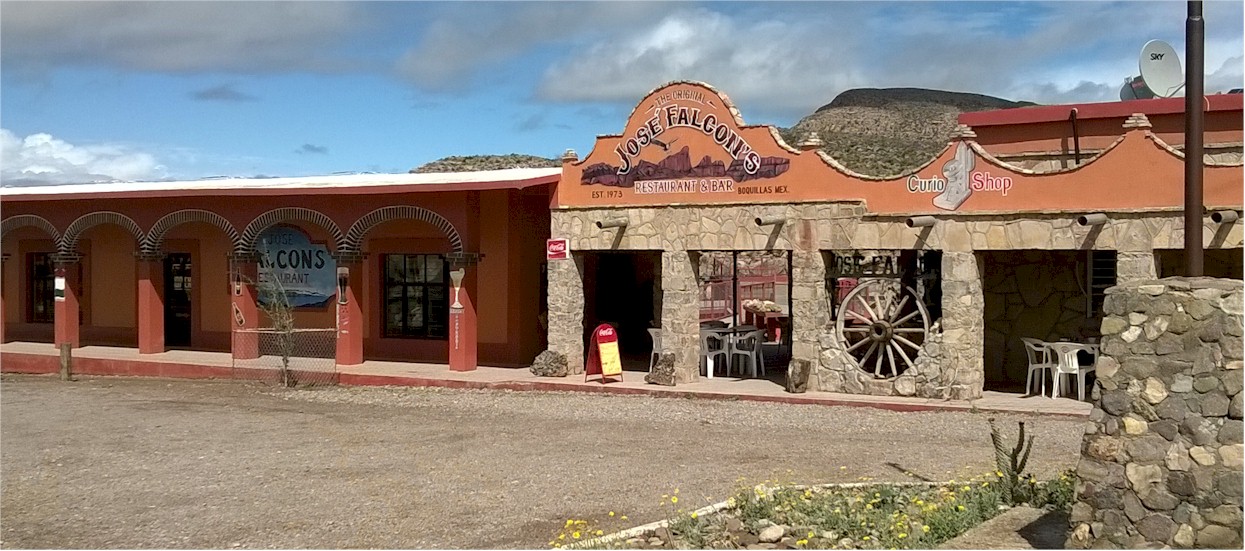
About 5 minutes later our driver and kindergarten aged guide are pointing the way into the unmistakable, bright white trailer of Border Control.  With a quick immigration form and a scan of our passports, we’re allowed into the country.  Back on the dirt street, there are two or 3 brightly painted shops offering everything from tourist trinkets, cool beers and cheap Mexican food.  But, we want to see what else might be here.  Walking through town, many of the residents are just beginning to open their souvenir stands.  Most offer small wire sculptures, polished rocks and woven bracelets.  A few also offer towels and blankets embroidered with bright letters of “Boquillas, Mexico”.  After wandering a few blocks out of town for some pictures, we return along the souvenir stands, make a quick purchase of a wire sculpture and make a beeline for a shaded patio with signs offering $2.50 cold beers.  Our guide goes off to talk with other kids his age, we make sure they all have a Coke on us as we order a couple of Coronas.  The oarsman had said we were the first across the river that morning, however – there evidently has been a steady influx of river runners because within the next 30 minutes, several of the tables are filled with US and Canadian citizens.

After a few beers and some excellent chip, salsa and guacamole , we return to the Border Control to “check out”, catch our ride out to the boat launch and make our way back to the US border control point.  Here we use self-service kiosks to scan our passport, answer a few questions on the phone with a customs officer in El Paso and are quickly cleared for reentry.  Our quick trip to Mexico was great fun.  The small village of Boquillas was nearly turned into a ghost town during the crossing closure. It’s good to see the tourist interest and dollars flowing into this tiny village again.   Far from the cartel corruption of larger border towns, the villagers seem genuinely happy for our visits and respectful of the partnership that achieved the reopening of this important border crossing.


Into Big Bend National Park
15 03 2013
Rio Grande Village Campground

Rio Grande Village Campground

We’re on the road again, leaving Lajitas for the short trip to the west entrance gate of Big Bend National Park. Once inside the park, we’re bound for Rio Grande Village which is slightly north and east of the river’s “U-turn”. From the Terlingua/Study Butte entrance it’s about 50 miles down to Rio Grande Village. This is the most accessible campground and provides the best options for an site without a reservation. The NPS campground at Rio Grande Village has 100 no-hookup sites, only 46 are reservable online. We’re hoping for an available walk-up site of “un-reservable” 54, even though spring break is in full swing in Texas. Our “back-up” plan is at a full-hookup campground run by a private concessionaire. But these spots, even though they have full hookups, are less than ideal – they are all back-in sites set along a long narrow paved parking lot. There are green areas with trees behind the RV rows, but certainly not what we come to the National Park for.

Rio Grande Village Campground

Rio Grande Village Campground

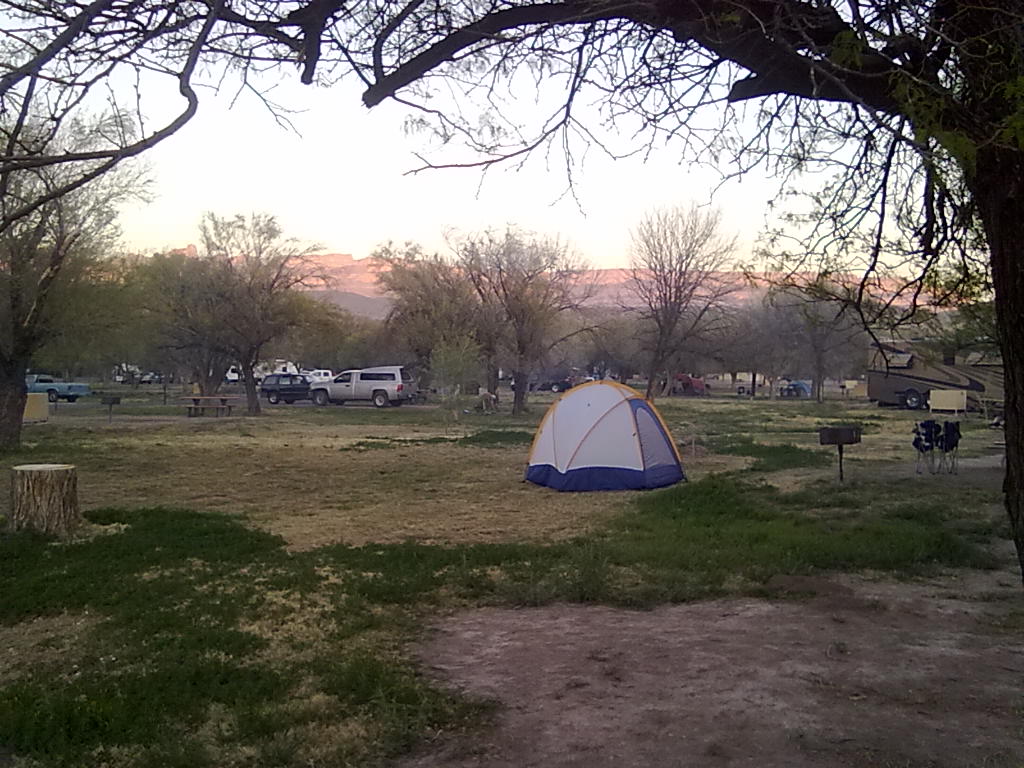
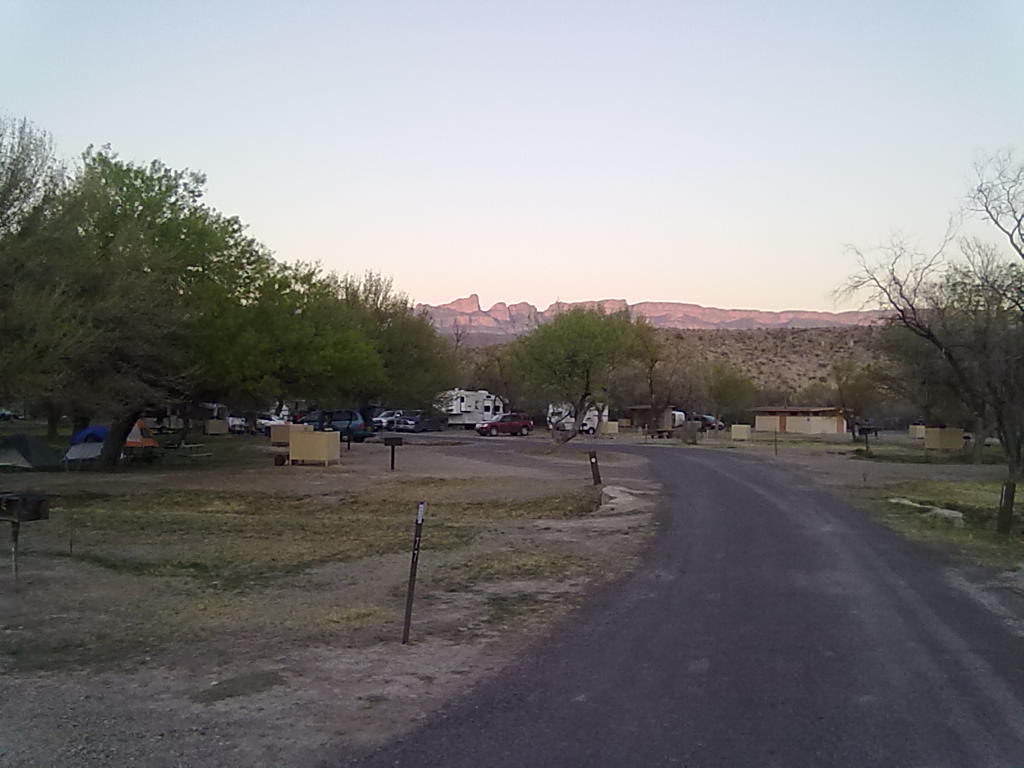
After arriving around noon, we’re pleased to find plenty of walk-up sites available. The camp host is most helpful pointing out easy-access sites and the “no-generator” zone. We opt for site #70 a small pull-through outside of the “no-generator” zone and fairly near the entrance. For the most part, these sites are smaller and many have overhanging tree limbs that could get in the way of bigger rigs. The roads throughout the campground are paved, some sites have a partial paved pad but most are gravel. Each site has a picnic table an above-ground grill and a “beast box”. These metal boxes are fairly large (big enough for several coolers), secured by “bear proof” latches and used to keep all food products away from the roaming bear and javalinas. There are water hydrants scattered around the campground, but the only threaded connection for filling RV fresh water tanks is just outside the park near the RV dump station. There are also restrooms with dish washing sinks scattered through the park. Once you’ve paid your NPS entrance fee of $20 (for 7 days), the camping fee is $14/night payable with either cash or credit card. You’re basically “off-the-grid” here, the last cellular service was a weak signal around Panther Junction. There is an open WiFi hotspot provided just down the road at Rio Grande Village store for those that can’t avoid a quick tweet or email.

Rio Grande Village Group Camping

Rio Grande Village Group Camping

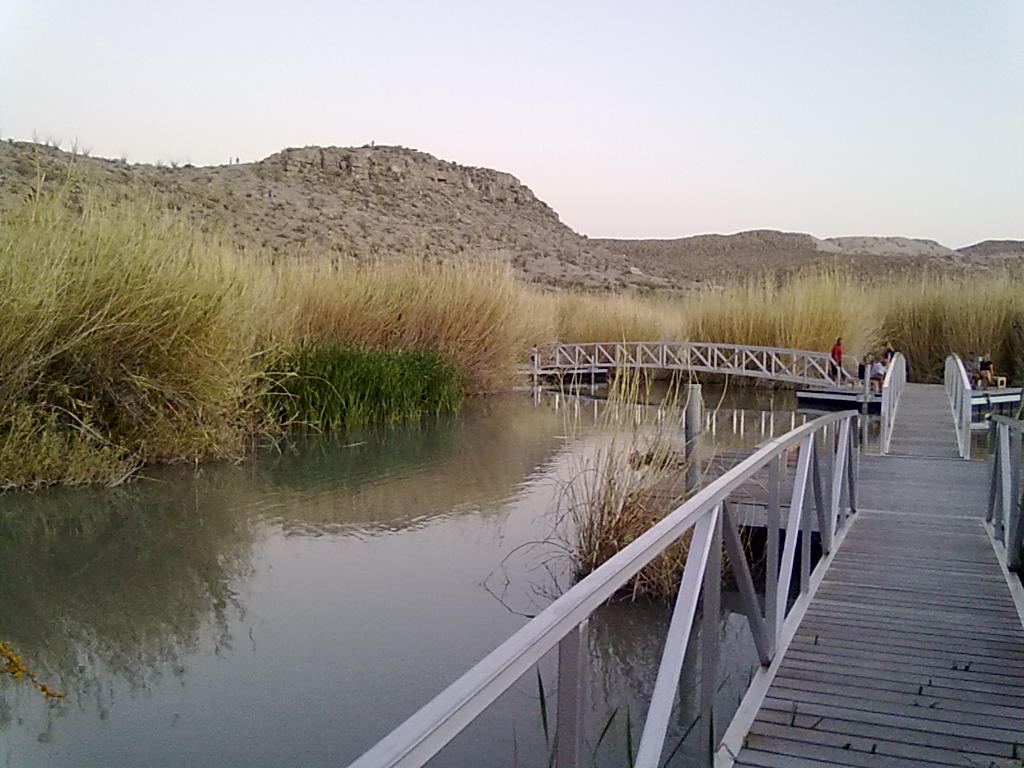
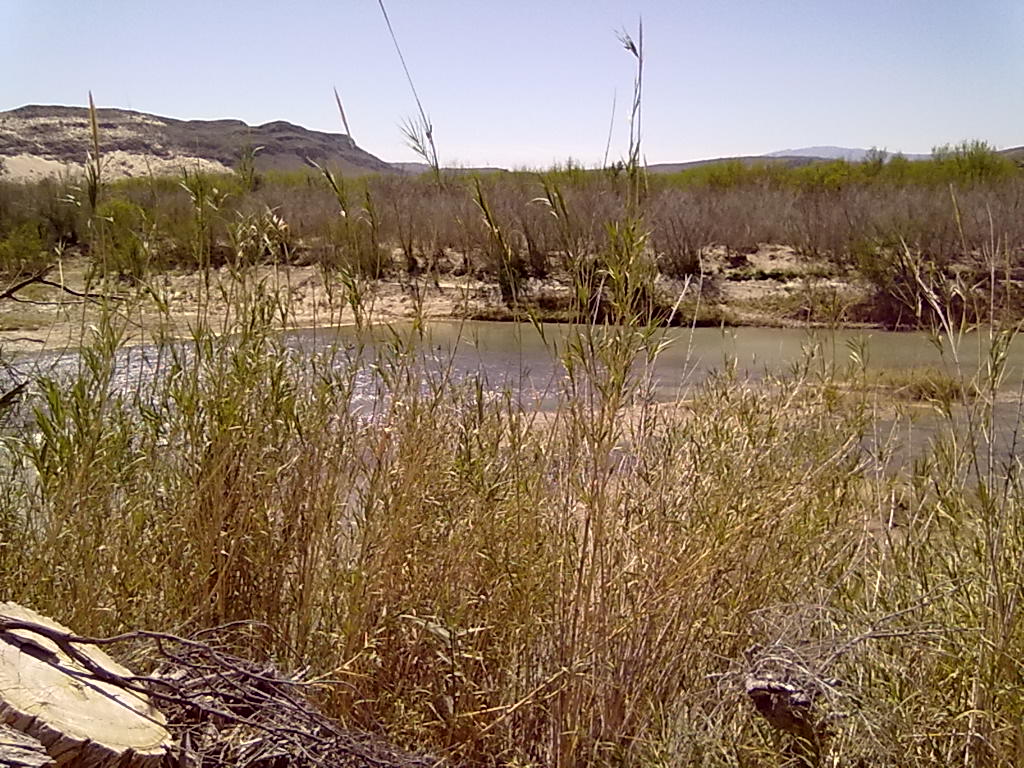
River from Rio Grande Village Campground

River from Rio Grande Village Campground

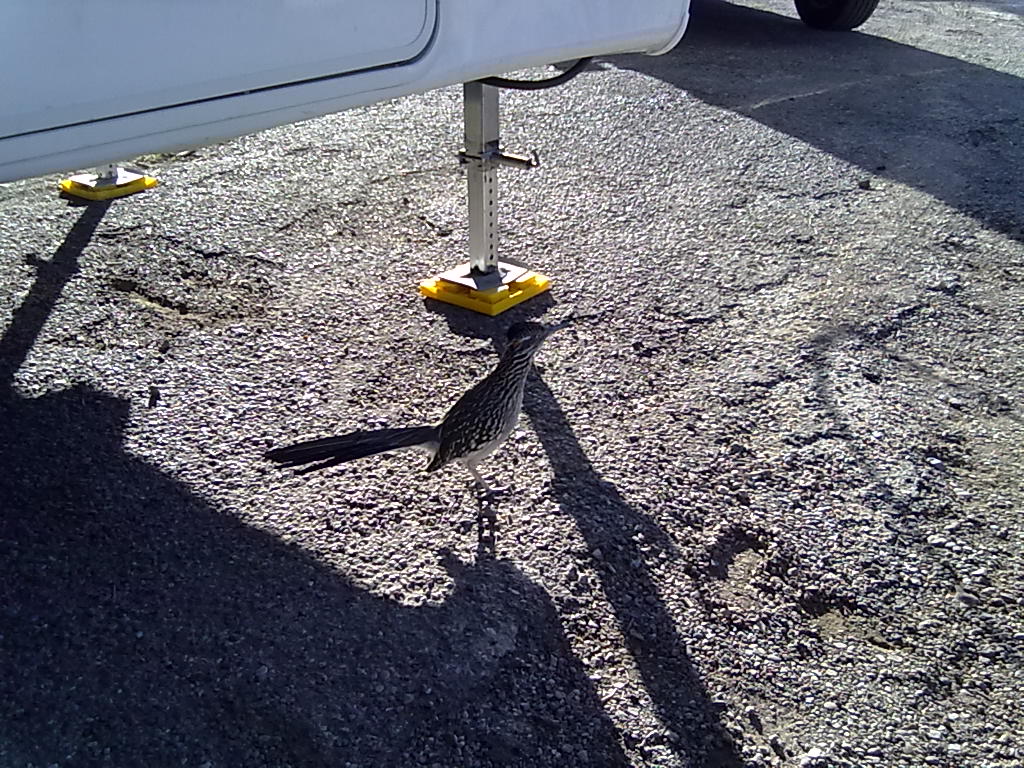
Roadrunner Campsite Visitor

Roadrunner Campsite Visitor

River from Rio Grande Village Campground

River from Rio Grande Village Campground

There are two other campgrounds in the park, Cottonwood near the SW corner and Chisos Basin in the center of the park. The road to “the Basin” as it’s called by park staff, could be a bit of a challenge for any but the shortest coaches or trailers. But, once you arrive at the campground the challenge will be even greater finding a place to park. Some of the sites are large enough, but the road within the campground has some sharp, tight turns. If you are headed to Chisos with a larger RV, you’d be well advised to drive the road without the rig first and find a campsite that will accommodate. One advantage of Chisos is the elevation – located at 5410 feet, it was nearly 20 degrees cooler than at Rio Grande Village at 1850’ elevation. We didn’t visit Cottonwood campground, but there are no specific warning issued about large rigs by the park service.